

Innovation in out-of-home (OOH) marketing is less about bigger billboards and more about new ways to connect with people in public spaces. A strong OOH campaign goes past simple visibility to deliver engagement, memorability, and clear results.
Smart ideas lead to content that catches the eye and sparks talk, often spreading online. Great OOH cuts through digital noise and can’t be scrolled away or blocked.
Standout OOH work often fits into its surroundings and uses the setting as part of the message. It is bold, never dull, and aims to make people look twice. These campaigns reflect a firm grasp of where the audience goes and how they think, placing messages where they will land best.
Through sharp copy, surprising visuals, or interactive parts, the goal is to create a personal and relevant moment that people remember long after they walk by.
How Technology Changes Out-of-Home Advertising
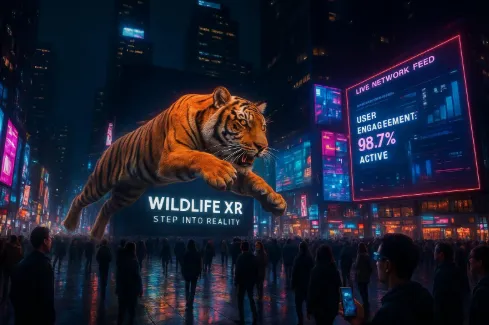
Technology drives many of the biggest changes in OOH. Programmatic buying, better targeting, and new creative formats are reshaping how brands meet people outside their homes. Digital Out-of-Home (DOOH) moves beyond static posters to dynamic video and context-based creative. This shift brings motion graphics, 3D/anamorphic designs, and real-time data triggers that raise engagement in physical spaces.
The global DOOH market may reach $21.35 billion by 2030, up from $6.28 billion in 2020, growing at 13.0% per year. Growth comes from wider use across industries, fast digitization, urban growth, smart cities, and steady tech progress. Tools like facial recognition and data analytics allow sharper audience targeting for memorable, high-impact campaigns.
Programmatic DOOH (pDOOH) platforms also automate buying, selling, and delivery, making it easier for brands of any size to run advanced OOH advertising campaigns.
- Programmatic buying: set rules, buy on the fly
- Dynamic creative: adjust messages in real time
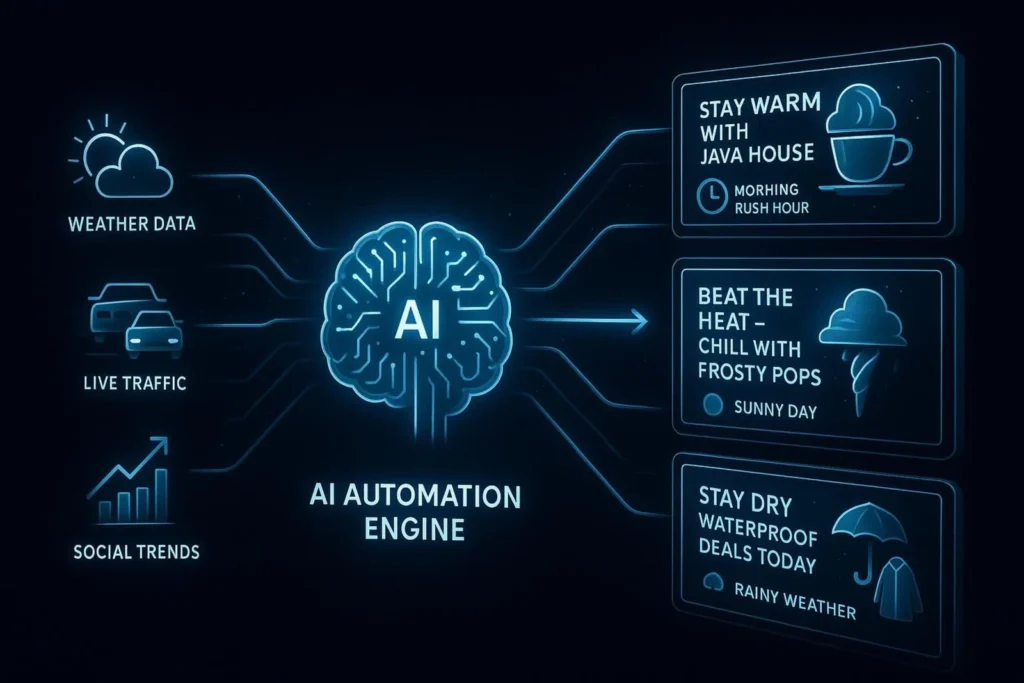
- Data triggers: react to weather, news, events
- Attribution: measure actions after exposure
| Feature | Traditional OOH | DOOH |
| Content | Static | Dynamic/video |
| Updates | Fixed | Real-time |
| Buying | Manual | Programmatic |
| Targeting | Location-based | Location + data signals |
| Measurement | Estimates | Attribution and lift studies |
Types of Innovative Out-of-Home Marketing Strategies
Digital Out-of-Home and Programmatic Campaigns
DOOH is now a key pillar of modern OOH. Unlike static billboards, DOOH delivers content that updates in real time. Programmatic DOOH goes further by automating the process, letting advertisers set conditions for buying. Ads run automatically when those conditions are met, creating sharp targeting based on real-world behavior. For example, travel ads can appear during cold weather, or a message can ramp up near a competitor’s store. This fast response keeps ads relevant and tuned to news, weather, or market shifts.
Real-time control changes the game. Programmatic tools allow instant tweaks to creative, messaging, targeting, or budget without long contracts. This agility keeps campaigns fresh and aligned with current conditions. Automated planning also shortens the OOH buying cycle, helping teams find inventory, handle deals, and adjust campaigns in one place, leaving more time to craft stronger ideas.
Location-Based and Context-Aware Activations
More OOH strategies now use location-based and context-aware activations. This means matching ad content to a place and the moment. The Aruba Tourism Authority used live weather data to trigger DOOH ads, reminding commuters in cold U.S. cities of Aruba’s warm beaches. In the UK, Google’s “Make the Most of Summer” used location, weather, time, day, and cultural events to show timely search results like “Best ice cream in Glasgow” or “Parks near Shoreditch.”
These efforts show how placement and timing add instant relevance. Local references can draw interest and signal research. Timberland’s “Urban Adventures” in London displayed current location, nearby points of interest, distance, steps, and calories burned, nudging movement while highlighting comfort features. This kind of context builds attention and a stronger link with the audience.
Mobile and Social Media Integration
OOH works best when it connects with mobile and social channels. QR codes play a key role, driving traffic and direct interactions. In the UK, Coca-Cola’s #TakeATasteNow let people scan a QR code on a Piccadilly screen to change the visual on their phones, mixing AR and multi-channel engagement.
The aim is to spark online talk and user-made content. Fun outdoor ads often get shared on social platforms, adding reach at no extra cost. Many brands bring the playful style of TikTok to outdoor screens. This link turns OOH into a bridge between physical space and digital life, creating a full brand experience for people who live on their phones.
For brands that want to merge offline visibility with online engagement, BE Media delivers fully integrated OOH campaigns. From digital billboards synced with social media trends to interactive QR-driven experiences, BE Media helps brands amplify their message across multiple touchpoints.

Personalization and Data-Driven Targeting
People now expect brands to speak to their needs. Data-driven targeting makes that possible in OOH. By using first-party data, brands can connect with the right audience at the right time in the real world. AI and machine learning help collect and read data, then shape creative in real time based on demographics, behavior, and interests.
This push for high personalization is also moving spend to smaller DOOH screens. While mega-screens like the Las Vegas Sphere still wow, more investment is going to small formats that feel close and one-to-one. Audi’s “Your Sixth Sense” used traffic, time, and weather data to trigger roadside messages about assistive tech when drivers might need it most.
Eco-Friendly and Sustainable OOH Tactics
Sustainability has moved into the mainstream. Many people care about brand impact on the planet, with 78% saying it matters and 55% willing to pay more for eco-friendly brands. DOOH is responding with lower power use, energy-aware scheduling, and cleaner hardware choices. Examples include energy-efficient LED and OLED screens, units powered by alternative energy, and circular repair and refurbishment programs.
OOH also helps raise environmental awareness. Public Disruptors ran an Earth Day takeover at Piccadilly, while OVO ran ads only when the grid used green energy (hydro, wind, solar). These moves show OOH can be sustainable in setup and in message, which can lift brand perception and loyalty with eco-minded audiences.
- Lower energy draw (LED/OLED)
- Green power sources
- Reused parts and refurbished screens
- Energy-aware ad scheduling
Augmented Reality and Interactive Experiences
To grab attention, many OOH campaigns now lean on AR and interaction. Brands want ways to pull people in and create moments they will not forget. AR delivers a clear “wow” effect, from simple QR-led effects to large setups that blend physical and digital space.
Interactivity and gamification are on the rise. In Poland, Burger King’s “Shake’O’Meter” offered discounts on Oreo shakes tied to outside temperature, with free shakes at 40°C. These playful tools create fun, collect useful data, and drive social sharing, which spreads reach. With ongoing progress in AI and VR, expect even deeper interactive OOH ahead.
What Drives High-Impact OOH Campaign Results?
Role of Creativity and Visual Storytelling
Great results start with strong creative and clear visual stories. With so much information around, the work that dares to be different, tells a story, or stirs emotion stands out. Modern OOH now includes dynamic, video, and context-led content. Motion graphics, 3D/anamorphic builds, and live data triggers raise engagement in public spaces.
Specsavers used branded vans “stuck” in odd parking spots, while Volkswagen used witty copy to mark the VW bus comeback. These ideas use spatial humor, smart use of space, and visual clarity to pull focus and stick in memory. Even campaigns that play with confusion, like MoonPie’s alien-targeted ads with made-up language, can create buzz and push viewers to search for answers. The aim is work that people see, feel, and remember.
Measuring Effectiveness and ROI in Out-of-Home
OOH is no longer a top-of-funnel play with fuzzy results. New programmatic tools and attribution methods help track success across the journey. Measurement now sits at the center of planning, with options like foot traffic studies, device ID passback, and brand lift surveys that use location data to gauge shifts in familiarity, recall, or views.
Marketers can add unique markers-QR codes, hashtags, custom email or phone lines, and promo codes-to capture direct responses. Social listening tracks mentions and shares sparked by the ads. Web analytics can link traffic spikes to where and when screens ran, and reveal changes in new vs. returning visitors. Inbound sales increases remain the clearest proof that outdoor exposure helps the business grow.
- On-site actions: footfall lift, store visits
- Digital signals: QR scans, site sessions, conversions
- Brand metrics: lift in familiarity, recall, favorability
- Sales: inbound leads and revenue tied to flight dates
Case Studies: Brands Using Innovative OOH to Stand Out
Surreal, a healthy cereal brand, launched a January push with lines like “It’s January, who can be bothered,” pairing simple visuals with a strong voice. Specsavers’ award-winning stunt with misparked vehicles and “Book an eye test today” used spatial humor to drive attention.
The Las Vegas Sphere, open since September 2023, shows the scale of mega-DOOH, hosting campaigns from Target, Android, and Heineken. While costly, its 360-degree canvas often goes viral. Oatly ran street-art-style OOH that first said “This piece of art is here to tell you ads are not appreciated here!” and later changed to “This piece of art is here to tell you we are here!” with a pack shot, leaning into humor. Amazon’s billboards paired wordplay with celebrity faces to promote Prime services, proving that strong creative plus media weight can amplify a message.
How to Plan and Execute Successful Innovative OOH Campaigns
Choosing the Right Format and Location
Planning starts with careful choice of format and place. Options include classic billboards, bus shelters, digital screens in elevators, and vehicle wraps. Pick based on your audience’s daily path and where your message will hit hardest. For example, a sunscreen ad near a beach gains instant context.
Scouting matters to make sure your message is visible, readable, and strong from the viewer’s point of view. Study the details of the space and how it may help or hurt the idea. Match the format to the level of motion and interaction you want. If you need real-time data or AR, go digital. If you want a simple, bold line that sticks, a static billboard may be best.
Aligning OOH with Wider Brand Strategy
OOH works best as part of a larger brand plan, not a one-off. Keep message, tone, and design in line with your site, social, and other media. This creates a steady brand feel and lifts overall impact. When OOH and other channels work together, the online ripple can grow fast.
Using first-party data helps connect the dots and deepen ties with customers. Bring your data into OOH to reach the right people at the right time in the real world. This setup lets OOH help across the full funnel-from awareness to direct response-instead of acting alone.
Maximizing Engagement through Interactivity
To stand out and build memory, invite people to take part. Move past passive viewing with tools like QR codes, social challenges, or AR layers. When people interact, they are more likely to remember-and to share.
Interactivity can be subtle, too. Content can shift based on live data or local conditions. Letting people influence what they see, even a little, adds a sense of control and a personal link. A screen might ask for user content for a metaverse shop, or a QR scan could change the visual. Aim for a two-way exchange. This raises engagement and provides useful data on what people like.
Common Challenges and Misconceptions about Innovative OOH
Is Out-of-Home Too Expensive for Smaller Brands?
Many think innovative OOH is only for big spenders. While large-scale sites like the Las Vegas Sphere are pricey, new tools are opening the door. Programmatic DOOH supports flexible budgets and sharper targeting without long, fixed deals.
Innovation does not always mean high cost. Smart ideas and sharp placement can beat size. Smaller, close-up DOOH setups-often powered by AI and machine learning for high personalization-are growing. Compact screens enable fine-tuned content and a closer feel. By teaming with OOH media owners or intermediaries, smaller brands can tap expert help and data for effective, budget-wise plans.
Can You Accurately Track Performance of OOH Campaigns?
Another concern is measurement. OOH once leaned on awareness with weak attribution, but tech is changing that fast. Today, OOH offers many ways to track impact across the journey.
Foot traffic studies and device ID passback show real-world actions. Brand lift surveys using geo data show shifts in recall and perception. Unique markers-QRs, hashtags, promo codes-capture direct responses. Social listening monitors chatter sparked by the ads. Web analytics can tie traffic peaks to specific screens and times. This lets brands track reach and impressions and also check changes in brand metrics, sales, and ROI.
Future Trends in Out-of-Home Marketing Innovation
Growth of AI and Automation in OOH
OOH’s future ties closely to AI and automation. AI and machine learning will shape how teams plan, launch, and tune campaigns. In 2025, expect more use of AI to read audiences and build personal content in real time, making ads feel more relevant to each viewer.
Automated planning will keep improving, making it simpler to find inventory, handle deals, and adjust flights inside one platform. Generative AI will help produce striking visuals and dynamic creative from text prompts, saving time and budget. AI can also adjust outdoor ads based on weather, events, or traffic right away, so teams can focus on strategy and ideas.
Integration with Retail and Experiential Marketing
As online and offline blend, OOH will link more closely with retail and live brand moments. People shop online more, but they still value in-person experiences. OOH will guide people from streets to sites and back again. Expect more digital signage pop-ups that create short-term, immersive touchpoints.
Think outdoor screens inviting user content for a metaverse shop, or in-store displays offering personal product tips. Brands want more ways to involve people, and OOH plus live experiences offer a strong stage. The “wow” will come from huge builds and also from smart, local, interactive moments that mix physical space with digital layers, making the retail journey more lively and memorable.
Predicted Changes in Consumer Engagement
Engagement will shift as people ask for more personal, interactive media. Years of screen time have led to “display fatigue,” so OOH must be more creative, more personal, and more interactive to stand out. “Tête-à-Tête” marketing-close, one-to-one moments-will shape 2025 plans.
Mobile links will grow, with QR codes driving clicks, traffic, and direct actions. OOH will aim to start online talk and user-made content. Giving people some control-shaping digital canvases or steering parts of the ad-will make OOH more participatory, deepen bonds, and turn passersby into active fans.