

Introduction
The 21st century has witnessed a remarkable shift in educational paradigms, driven by the global recognition of human rights, equity, and the value of diversity. Among the most transformative educational reforms is inclusive education—an approach that promotes the full participation of all students, regardless of their abilities or disabilities, in mainstream educational settings. Inclusive education not only reflects the ideals of justice and equality but also acknowledges that diversity enriches the learning experience for everyone. For students with disabilities, it means breaking down traditional barriers that have historically excluded them from equitable learning opportunities.
Understanding Inclusive Education
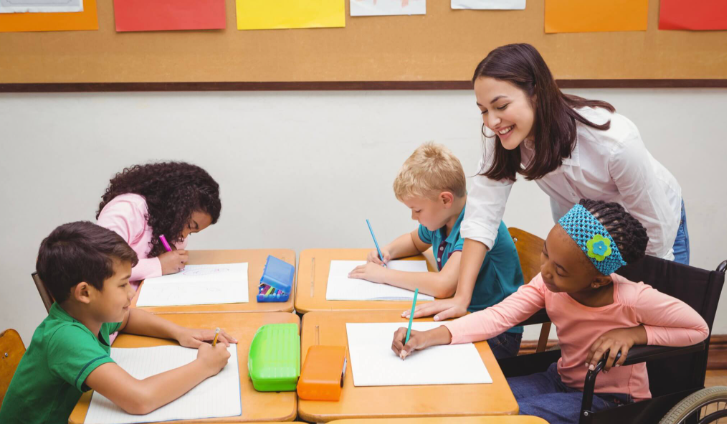
Inclusive education refers to the educational practice of integrating students with disabilities into general education classrooms rather than isolating them in special education environments. It emphasizes the right of every child to receive a quality education in a setting that fosters respect, dignity, and a sense of belonging. Inclusive education challenges traditional teaching methods and calls for systemic change in policies, curricula, infrastructure, teacher training, and attitudes toward learners with diverse needs.
Inclusion is not about simply placing students with disabilities in general classrooms—it is about transforming schools so that they can accommodate all learners effectively. It ensures access, participation, and achievement for every student, with or without disabilities.
Historical Context and Global Commitments
Historically, students with disabilities were often excluded from general education or segregated in special schools. The rise of the disability rights movement in the late 20th century and the introduction of global frameworks, such as the United Nations Convention on the Rights of Persons with Disabilities (CRPD) and Sustainable Development Goal 4 (SDG 4), have placed inclusive education at the center of global educational agendas.
- CRPD Article 24 asserts the right of persons with disabilities to inclusive, quality, and free primary and secondary education on an equal basis with others.
- SDG 4 aims to “ensure inclusive and equitable quality education and promote lifelong learning opportunities for all,” underscoring the importance of accessibility and equity.
Benefits of Inclusive Education
1. Social and Emotional Development:
Inclusive settings allow students with disabilities to form friendships, build confidence, and develop social skills by interacting with their peers. These interactions promote empathy, tolerance, and acceptance among all students.
2. Academic Achievement:
When properly supported, students with disabilities can perform academically at levels comparable to their peers. Inclusive environments often lead to better educational outcomes, as students benefit from higher expectations and enriched learning environments.
3. Community Integration:
Inclusive education fosters a sense of belonging and prepares all students for life in a diverse society. It challenges stereotypes and promotes the idea that everyone has something valuable to contribute.
4. Efficiency and Equity:
Rather than maintaining separate systems for students with disabilities, inclusive education creates a unified system that is more efficient and equitable, reducing duplications and promoting resource optimization.
Barriers to Inclusive Education
Despite progress, numerous challenges continue to hinder the effective implementation of inclusive education:
1. Inadequate Teacher Training:
Many teachers lack the skills, resources, or confidence to support students with disabilities. Without professional development, inclusive education can become superficial or ineffective.
2. Physical and Structural Barriers:
Schools may not be physically accessible to students with mobility impairments. Inaccessible buildings, transportation issues, and lack of assistive technology limit opportunities for many learners.
3. Negative Attitudes and Stereotypes:
Cultural stigma and misconceptions about disability continue to impact the acceptance and integration of students with disabilities in mainstream classrooms.
4. Rigid Curricula and Assessments:
Standardized curricula often do not accommodate diverse learning styles or needs, making it difficult for students with disabilities to thrive without individualized supports.
5. Resource Constraints:
Lack of funding for inclusive practices, support staff (e.g., special educators, therapists), and assistive devices can make inclusion difficult to sustain, especially in low-income regions.
Strategies for Breaking Barriers
To make inclusive education a reality, systemic reforms and proactive strategies are essential:
1. Teacher Preparation and Professional Development:
Universities and teacher training institutions must integrate inclusive education principles into curricula. Ongoing professional development should empower teachers with strategies for differentiation, universal design for learning (UDL), and classroom management techniques tailored for diverse learners.
2. Policy and Legislation:
Governments must enact and enforce laws that guarantee the rights of students with disabilities. These policies should be supported by clear implementation frameworks, monitoring mechanisms, and accountability measures.
3. Accessible Infrastructure and Technology:
Schools should be designed or retrofitted to be physically accessible. Investment in assistive technologies such as screen readers, hearing aids, and communication tools is critical for facilitating participation and learning.
4. Curriculum Adaptation and UDL:
Curricula should be flexible, enabling students with different abilities to access content in various formats. UDL principles encourage the use of multiple means of representation, engagement, and expression.
5. Parental and Community Engagement:
Inclusive education thrives when there is collaboration between schools, families, and communities. Parents of children with disabilities should be actively involved in planning, decision-making, and supporting their child’s education.
6. Data Collection and Research:
Governments and educational institutions must collect data on learners with disabilities to better understand their needs and measure progress toward inclusion. Research can identify effective practices and inform future policies.
Case Studies and Success Stories
Countries like Finland, Canada, and Italy have made significant strides in inclusive education. In Finland, inclusive practices are supported by a strong commitment to equity and a flexible curriculum. Italy has largely phased out special schools and uses co-teaching models to integrate students with disabilities.
In developing countries, programs such as the Inclusive Education Initiative by the World Bank have provided technical support and funding to promote inclusive systems in countries like Ethiopia, Nepal, and the Philippines.
The Way Forward: A Call to Action
Inclusive education in the 21st century must go beyond policy statements and symbolic gestures—it requires transformative change. As we move forward, it is essential to:
- Ensure that education systems are built around the principle of equity, not equality, meaning each student receives the support they need to succeed.
- Recognize disability not as a limitation but as a dimension of human diversity.
- View inclusive education as a societal investment that benefits everyone, not just students with disabilities.
The success of inclusive education lies in our collective will to break down barriers, shift mindsets, and reimagine education as a right, not a privilege, for all.
Conclusion
Inclusive education is not merely an educational approach—it is a fundamental human rights issue. In the 21st century, as we strive for global equity, justice, and sustainability, breaking barriers for students with disabilities is both a moral and practical imperative. By building inclusive systems, we empower every learner to reach their full potential, enrich the learning environment for all, and create a more inclusive, compassionate world.